You're head of the Old Masters department at the Olomouc Museum of Art, and you specialise in early modern European art. At the same time, you take a strong interest in — and actively push for — the use of new technology to open up cultural heritage in memory institutions. Where does your interest in digital technology come from?
The question could actually be phrased the other way round — how I got into old art. Digital technology has been with me since primary school. In the 1980s, we had the first computer classrooms, we were learning BASIC, and at the end of the lesson we could play simple 8-bit games. That fascinated me at the time. I went to programming clubs, and later I was building computers for myself, my friends, and my family. At university, this interest in technology then naturally met my interest in early modern art.
How do you manage to bring the world of old art and digital technology together in museum practice today?
I'm an art historian, but I work in a museum, where it's essential to find narratives that speak to contemporary visitors. The big turning point for me came when I started taking my own children to museums and wanted to pass on a relationship with these institutions. It quickly became clear that fine-art museums were good for about ten minutes of attention — and then boredom set in. So I started taking them to natural science and technology museums. There, curators and educators have been working for a long time on delivering the visitor experience in a different, more engaging way than fine-art museums do.
In a natural science museum there's noise, excited children, and energy. In a fine-art museum there's silence and the atmosphere of a temple that art historians often build for themselves.
I often use the Vienna example: you're standing by the statue of Maria Theresa, with the Kunsthistorisches Museum on your left and the Naturhistorisches Museum on your right. In the natural science museum, there's noise, excited children, energy. In the fine-art museum, silence and the atmosphere of a temple that art historians often build for themselves. My aim was to take the best of both and try to bring them together — to make the visitor experience in fine-art exhibitions more accessible and more engaging, without giving up on specialist content.
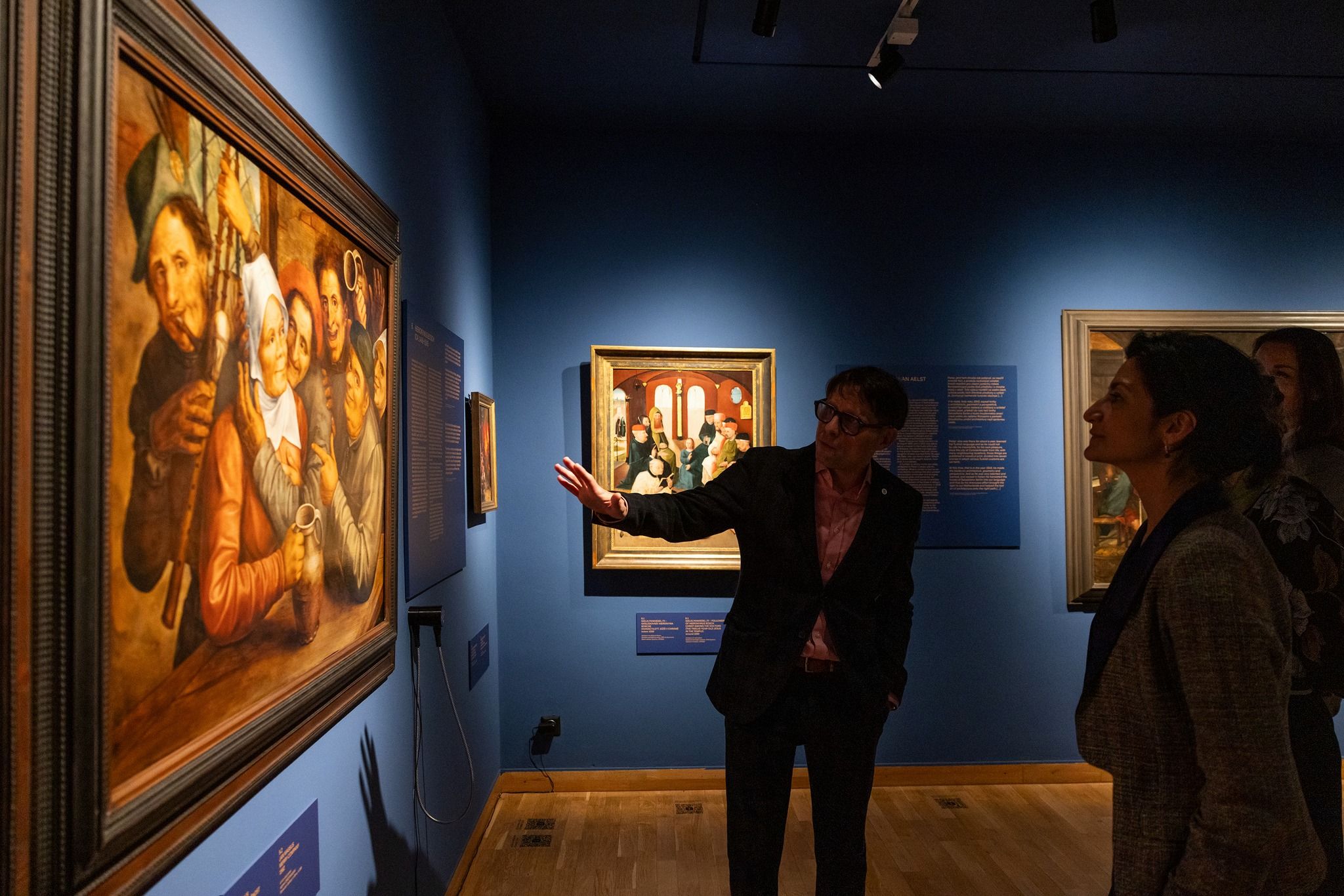
Lives: Artists from the Pen of Karel van Mander, Olomouc Museum of Art
How does this thinking feed into your curatorial work?
It comes through in the choice of topics — I focus mainly on cultural-historical exhibitions that have the potential to tell a story — and in the interpretive tools we use in those exhibitions. Alongside the classic exhibits, for instance, we often work with assisted education. That obviously can't be provided throughout the museum's opening hours, so we also use new media — and today that includes artificial intelligence.
You studied in the Netherlands, where museology is at a very high level, especially when it comes to making exhibitions accessible to a wide range of visitors. Did Dutch museum practice influence you?
I studied there in 2005, when new technology was only just starting to reach museums. But when I compared it with visits to galleries at home in the Czech Republic, the difference was striking. The experience in Dutch museums was overall more natural, more pleasant. Monitors and digital elements were already appearing, even if they weren't fully thought through yet — it was the prehistoric age of digital technology. What inspired me, then, wasn't so much sophisticated digital applications as the overall welcoming approach.
Digitisation isn't about taking a drawing, putting it in a scanner, and producing a file. It's a process that starts in the depository and ends with the visitor.
A significant part of your work also involves supervising the digitisation of collections. Between 2021 and 2024, you took part in the large research project Loaded – Open: Digitisation, access, and educational use of art collections in memory institutions. What was key to getting the project off the ground?
The realisation that digitisation isn't just about technical delivery. It's not about taking a drawing, putting it in a scanner, producing a TIFF, and calling it done. Digitisation is a process that starts in the depository and ends with the visitor. The Loaded – Open project wasn't only about getting the digitisation line up and running — it was also about making the finished digital files available online. As part of the project, a collections portal was launched, and together with the Library of the Czech Academy of Sciences we started developing the open-source tool INDIHU Exhibition, which our education department now helps develop. It lets visitors build their own virtual exhibitions using our digitised pieces.
Do you share the digital files with other platforms as well?
We work with Kramerius and the National Digital Library — partly for the museum exhibits and partly for the holdings of the Archbishop's Library in Kroměříž. We're also members of the European Heritage Label, a European Commission designation that's been running since 2012. The Olomouc Museum of Art has held it since 2015, and within that platform I lead one of the working groups, focused on digitisation and new media. Through this network, we're now preparing a collaboration with Google Arts & Culture, which will include creating online exhibitions and presentations using our digital files.
Under what licence do you release the digitised content?
Most of the digital files are freely available through Wikimedia under a Creative Commons licence. The exception is the music archive in Kroměříž, which we manage together with the Archdiocese of Olomouc. Some of the material in that archive hasn't yet been professionally catalogued, and the owner didn't want it made fully accessible. Otherwise, the overwhelming majority of our digitised holdings are freely available.
At the Museum of Modern Art, there's currently an exhibition titled Lives: Artists from the Pen of Karel van Mander, which you're the curator of. What's the concept of the exhibition, and how are you using current technology in it?
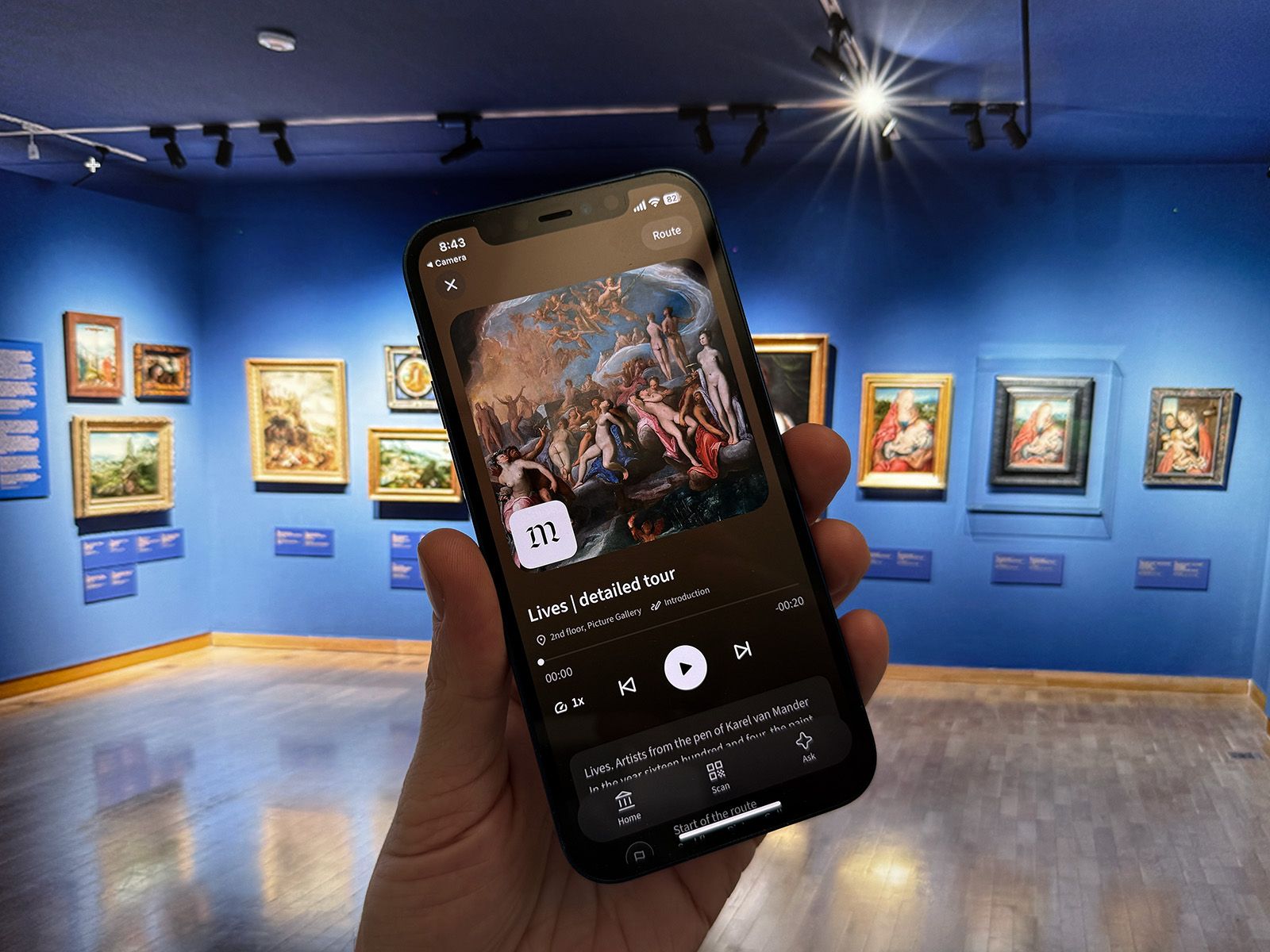
The exhibition is structured around the Book of Painting, which Karel van Mander published in 1604 in Haarlem. It's a key source for art history, but it's also very readable and entertaining. So a few years ago, the translator Zuzana Henešová and I decided to publish the book in Czech for the first time. It quickly became clear that it would be a shame to stop at a publication, and we started thinking about an exhibition. It was originally meant to be smaller, for the Archdiocesan Museum, but thanks to additional funding from the Ministry of Culture we were able to prepare it on a much larger scale. Out of ninety-five artist portraits, we ended up selecting twenty-four, which we present in the exhibition alongside van Mander's text. For fourteen of them, visitors can also listen to the text read by actor Igor Bareš, who recorded excerpts from the book for us. The whole exhibition is then guided by the Cabinet of Wonders AI guide, for which we prepared three variants of the tour. The first, the specialist tour, lasts ninety minutes and is based on the texts written for the exhibition catalogue. In the second, I present my personal selection of fourteen works, and in the third — the tour for children — the narrator is Karel van Mander himself. Alongside the audio guides, we also prepared an interactive element: visitors type a topic for a painting on a screen, choose one of twenty-five artists, and AI generates an image in that style for them.
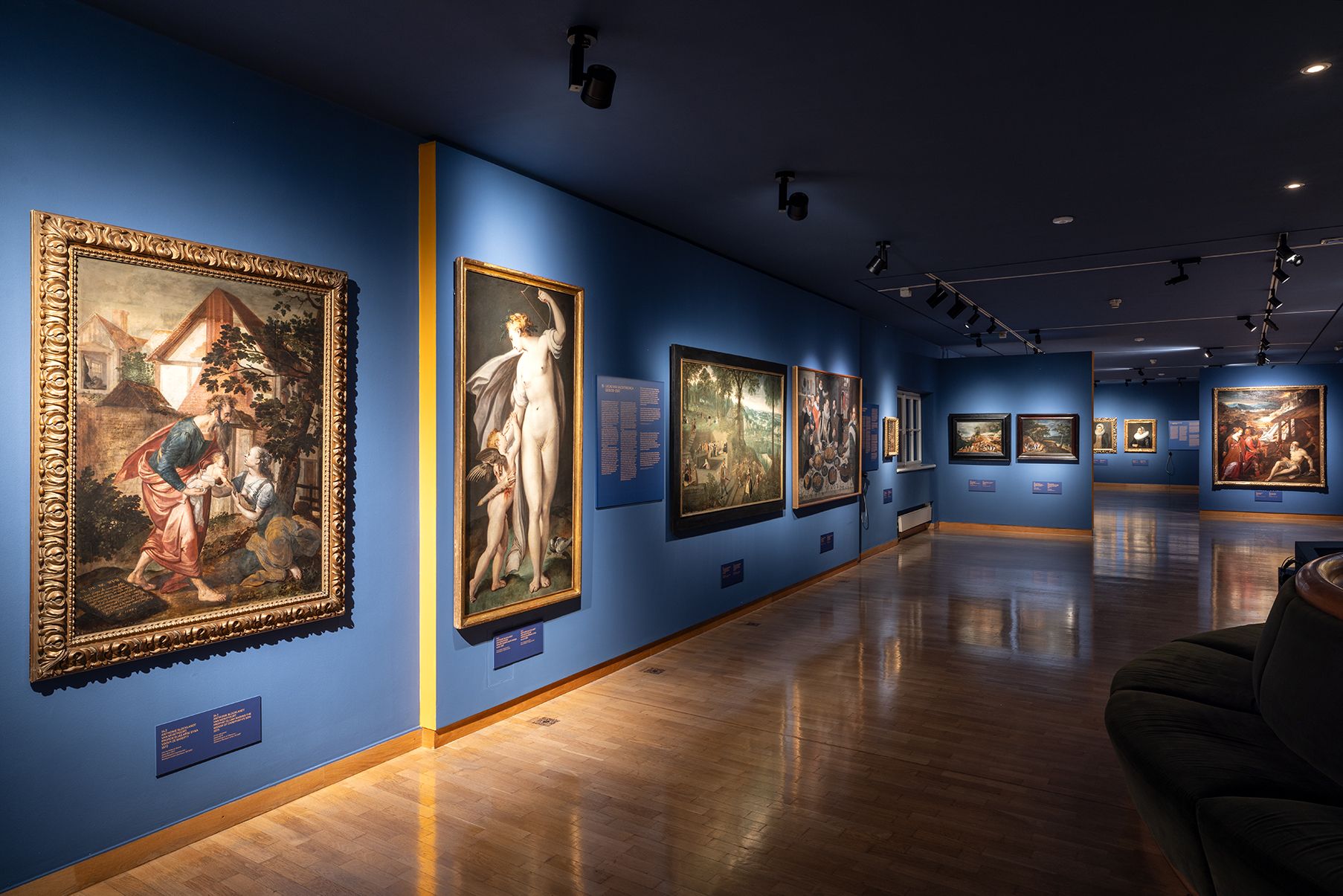
Lives: Artists from the Pen of Karel van Mander, Olomouc Museum of Art
Are visitors to the exhibition using the Cabinet of Wonders guide?
They are, though I have to admit a few things surprised us. A lot of visitors who come alone, for instance, choose the children's tour and walk through the exhibition that way. That's very valuable information for us. It may be a sign that in the future, we should simplify the basic tour for general visitors even more. That's another reason we see this exhibition as an experiment — we're exploring not just what AI can do, but also the audience's direct reactions.
We see the current exhibition as a laboratory. We're exploring not just what AI can do, but also why adult visitors often prefer the children's version of the tour.
Are you planning to use the Cabinet of Wonders guide in other exhibitions at the museum?
Definitely. We'd like to launch the same three-tour format in the permanent exhibitions at the Archdiocesan Museum in the first half of next year. We'll have more time to prepare there, and we're planning to work closely with the education department. That's why we think of the current exhibition as a kind of laboratory of new media at the Olomouc Museum of Art — it's the first swallow, where we're trying out how to work with AI tools.
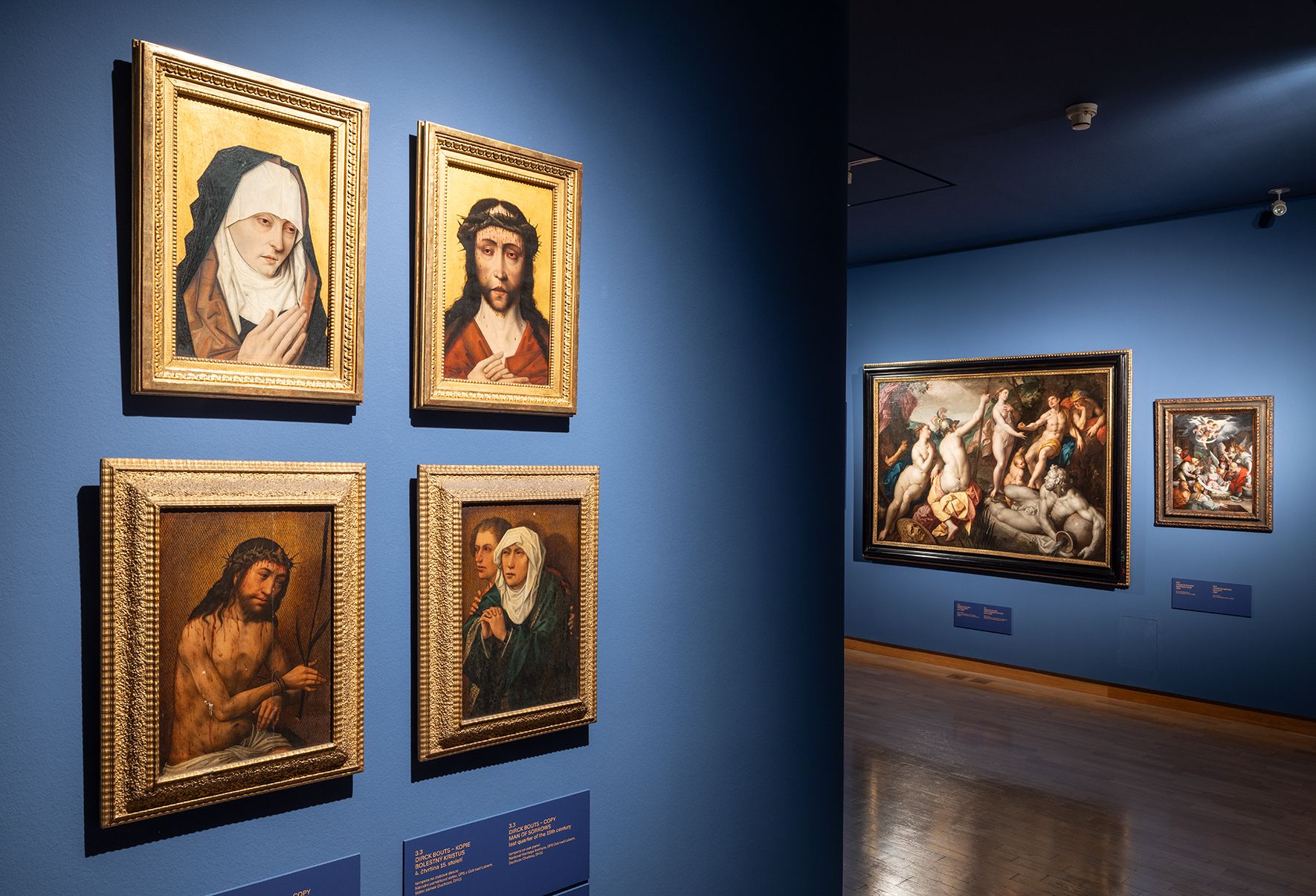
Lives: Artists from the Pen of Karel van Mander, Olomouc Museum of Art
Are you preparing any other projects that will use current technology to make your exhibitions more accessible?
We'd like to find funding for our own AI-guide project, which would welcome visitors at several points around the museum. We want to avoid the ethical issues that come with digitising historical figures, so the guide would take the form of a curator who openly steps into various historical roles connected to the Archdiocesan Museum. Alongside that, we're planning to create a digital game with a detective storyline that could walk visitors through the museum even before they arrive. Our inspiration was a project at the Archaeological Museum in Naples, made a few years ago and very successful.
You already use game-style visualisations at the museum — how do they work?
With a gamepad, visitors can walk through different historical environments set on Saint Wenceslas Hill — the space of the cathedral and the Archdiocesan Museum. It's essentially augmented reality with strong game elements. The player moves through a defined space, can enter buildings, and inspect objects. In the future, we want to enrich this visualisation with a storyline and characters the visitor can talk to, getting more information about the period. In this respect, digital technology is a very effective tool for bringing historical context closer to visitors.
Miroslav Kindl is head of the Old Masters department at the Olomouc Museum of Art. He specialises in early modern Dutch painting, which he also teaches at Palacký University Olomouc. He has a long-standing focus on digitisation and the use of new media in the museum environment.